Our corporate video production process explained (step-by-step)
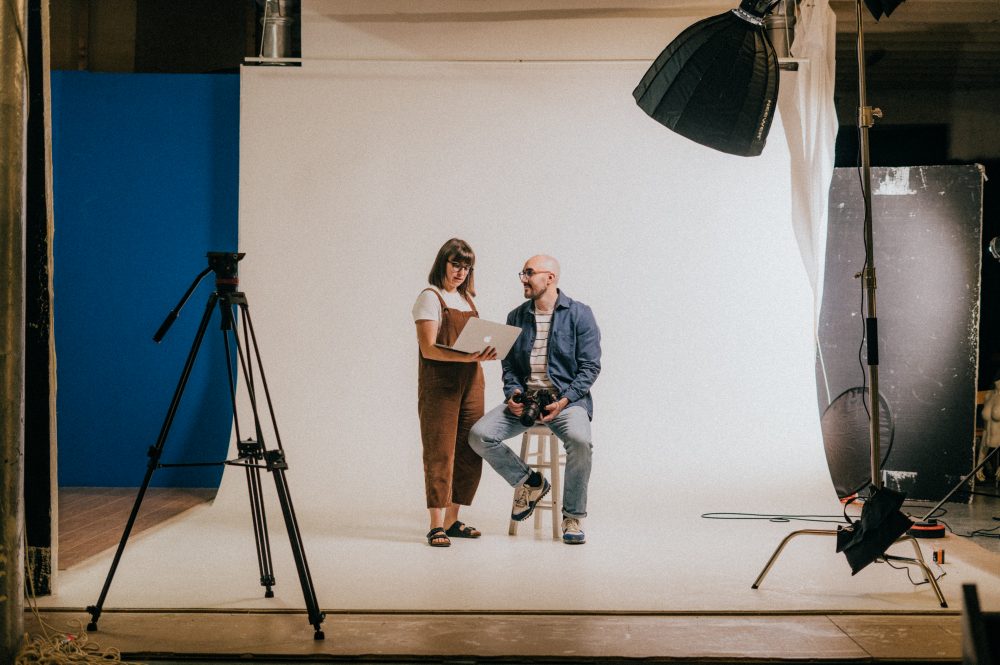
If you’re looking to start or expand your video production projects, it can feel a little confusing to know where to start. But that’s where a video production agency like us can make things all the more simple! Here, we’re going to take a look at the corporate video production process, learning how we create a brief, the steps we take to ensure the shoot goes smoothly, and you end up with video content that ticks all the boxes, and sometimes more.
The connect phase
Every project kicks off with a connect phase. It’s during this phase that we take the time to learn as much as we can about the project at hand, and yourselves as a business.
We start with an immersion session. We like to treat this meeting as if we’re new starters at your business, learning how you work, why what you do is important and what it is that’s essential to the way you operate. Taking the time to learn what makes your business unique really helps us to ensure the content we produce ticks the right boxes for you. It also helps us to identify opportunities when on set to bulk shoot – this means capturing additional content on the day that can be used for multiple platforms later down the line.
As well as learning about you, the connect phase is where we discuss creative inspiration. We’ll cover your likes, dislikes and stylistic preferences to help inform how we’ll execute the final content.
Once we’ve gathered all the necessary information, we’ll then move on to the strategy phase.
The strategy phase
This is the phase where we start to explore different routes of creative execution. We’ll form ideas and create a clearer picture of what we’re aiming to achieve.
This is where we’ll also start to work on pre-production. This involves nailing down the requirements for the upcoming shoot. This might involve organising:
- Permits
- Cast and crew
- Equipment
- Scriptwriting
- Shot lists
- Storyboards
- Scheduling
- Location finding
- Number of edits to be produced
- Format for each edit
Where necessary, we’ll create a Gantt chart to maintain full visibility of the tasks at hand, so both ourselves and stakeholders client side can see the video production workflow.
Many if not all of these tasks can be produced as collaboratively as you see fit. For example, some clients may prefer for us to write a video script for them to sign off, whereas others prefer to fully take on this task.
Tasks such as completing the storyboard help to create a visual guide of what the finished video will look like scene by scene. It helps to ensure we’ve captured the right narrative, and we’ve featured all the relevant points needed for the final video.
During pre-production, we may also go on a shoot recce. This allows the team to see the location we’ll be filming it, identifying the right backdrops, determining what equipment we’ll need to take and confirming the timings of the shoot day.
We’ll also confirm a shoot date during this phase, and work to complete all pre-production tasks to that deadline.
The filming day
If all pre-production has been completed, all crew and team members should be aware of what’s happening on the filming day, including where they need to be and at what time. Everyone’s roles will have been defined already, meaning the shoot day should run as smoothly as possible.
Contingency plans will be made for things that can affect the plan, such as illness or the weather, and everything is coordinated by our Producer.
On the filming day, there’ll be camera ops, potentially drone videography, audio capture and video direction. We’ll also plan to capture behind the scenes content which can be ideal for social media posts.
Once all content has been captured for the day and the shoot is wrapped, we’ll move on to post production.
The post production phase
During post production, our editor will get to work creating the final edits of our project. Depending on the project, this can be a straightforward edit and colour grade, or it might involve producing several edits, incorporating animation or graphic overlays, working on the sound design and potentially working with a voiceover artist.
Where the project allows, we may share a rough cut of the edit with our clients for them to check whether the necessary information has been included, or if any other ‘best bits’ need to be swapped in or out.
Feedback and revisions
The process for feedback and amends will be agreed beforehand, but we’ll always factor in time for at least one round of feedback. During this phase, it helps to collate all feedback from key stakeholders on the client side so it can be implemented in one go.
Delivery and distribution
Once all parties are happy with the final edits, we’ll share the files ready to be put live on the chosen platforms! This is where the fun really starts, and you can start to measure the performance of your content.
How long does the process take?
This largely depends on the type of project involved. If it’s a simple shoot with minimal moving parts and a simple edit output, we can turn around a project in as little as two to three weeks. Of course, the larger the project, the longer it can take, but the connect phase of our strategy is where we’ll nail down the timeline of a project and agree on the milestones that need to be met at each phase in order to keep things on track.
Why a clear process matters
Keeping everybody in the loop is essential to make sure the content we produce meets your goals. Taking the time to properly plan and understand a project is key to ensuring the output is effective, and also identifies opportunities to maximise the output and create efficiencies along the way.
This not only ensures your budget is being spent in the most effective way possible, but helps keep the teams informed so they can enjoy the process of capturing fantastic video content!
If you’d like support in maximising the output of your production budget, get in touch with us today.